

For Robert Schreiner, art is a profound reflection of the passage of time and the intimate relationship between human existence and the natural world. With decades of dedicated practice, his creative journey has been shaped by a deep philosophical exploration of life’s contrasts solitude and connection, hardship and beauty, fleeting moments and enduring impressions. His work is not just a visual experience but a contemplative dialogue with these fundamental aspects of life.
At the core of his artistic philosophy lies a profound respect for the passage of time. He believes that time is a silent observer that enriches his work, allowing colors to deepen and textures to gain nuance as the years pass. An old painting, like a fine wine, becomes more expressive as it ages, revealing layers of story and emotion that only time can bestow. This idea drives him to patiently develop his pieces, nurturing them as one would tend to a living organism, trusting that the true essence of his work is revealed in its natural evolution.

Solitude is another vital element in his artistic process. Often finding inspiration in moments of silence and introspection, he sees solitude as a necessary space for reflection and inner dialogue. It is within these moments of quiet that he communes with his materials, listening to the subtle whispers of his intuition. His solitude fuels his capacity to translate complex emotions into abstract forms a visceral language that transcends words. In his view, true art emerges not from external noise, but from the depth of inner stillness and the conscious immersion in one’s own emotional landscape.

His connection with nature, particularly his experiences in the rugged forests and windswept landscapes of his homeland, profoundly influences his work. He describes his life in the woods as “rough and rugged,” where every day presents a confrontation with the raw, unpredictable forces of nature. These environments have shaped his understanding of resilience and authenticity, values he seeks to embody in his art. His paintings often evoke the textured surfaces of bark, soil, and stone, capturing the apathy and strength of the wilderness.
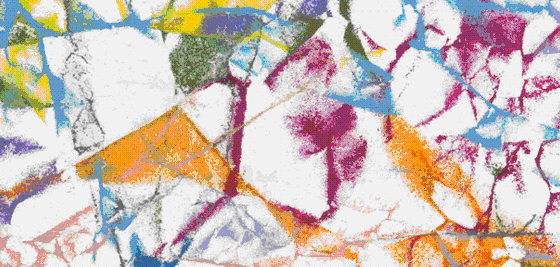
Central to his creative practice is the importance of using natural materials earths, sands, stones, and vegetal pigments integrated meticulously into his works. He believes that the true beauty of colors emerges when they are combined with authentic materials drawn from the earth itself. These natural elements bring a tactile richness and a soulful depth that synthetic paints can seldom match. Each impasto layer contains traces of the landscapes he loves sandy textures reminiscent of riverbeds, earthy tones inspired by soil, and mineral pigments that echo the mineral veins within mountains. By working with these materials, he strives to honor the earth and to create a dialogue that resonates with the natural cycles of life.

For him, art is an act of reverence a way of preserving and celebrating the enduring power of nature amidst the ephemeral passage of human life. His abstract compositions are less about form and more about conveying the emotional and spiritual essence of his experiences. Through his textured surfaces and layered colors, he channels the rugged beauty of life in the wilderness, the solitude of the forest, and the steady flow of time that shapes both nature and human consciousness.
In conclusion, his artistic journey is rooted in the belief that true art emerges from patience, respect for natural materials, and the willingness to confront solitude and the passage of time. His work invites viewers to reflect on their own connection with the natural world and to find beauty in the raw, unrefined moments of life. For him, art is not just a creation; it is a living testimony to the resilience of the human spirit and the timeless dialogue between humanity and the earth.

Robert Schreiner
Switzerland, 1965
Curated by


