

Interview with Celeste Lucchesi
In this interview, we connect with a visionary artist to learn about her artistic evolution, inspiration, and the techniques she employ. Her story offers a glimpse into the dedication and passion that fuels her work and highlights the importance of art in society today.
Hi Celeste, can you tell us about your background and what initially drew you to the visual arts?
I grew up in Italy surrounded by vibrant landscapes and rich cultural heritage, which naturally cultivated my fascination with color, form, and expression. From a young age, I was drawn to experimenting with drawing and painting, captivated by how art could convey emotions that words often cannot. The dynamic energy of visual arts became my way of exploring and understanding the world around me.
How would you describe your artistic style and influences?
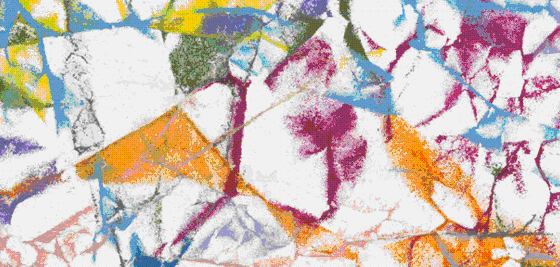
My style is abstract, characterized by vibrant colors and textured surfaces that evoke emotion and energy. I draw inspiration from contemporary abstract movements, but also from the expressive qualities of artists like Wassily Kandinsky and Joan Mitchell. I aim to create immersive and evocative visual experiences that invite viewers to interpret and feel beyond the surface.
What themes or messages are most important to you in your work?
Emotion and energy are central themes in my work. I want my art to serve as a gateway to introspection, encouraging viewers to engage deeply with their own feelings. The dynamic interplay of color and form reflects the complexity of human emotions and the vibrant energy that exists within us all.
Can you walk us through your creative process? How do you start a new piece?
My process begins with improvisation—sometimes spontaneous bursts of color and texture that I let develop naturally. I usually start by exploring with palettes and textures, allowing the work to evolve from intuition. From there, I refine the composition, emphasizing the emotional impact I wish to convey, often experimenting with layering and dynamic brushwork.

“Through color and texture, I strive to capture the wave of emotions that make us alive.”
What mediums do you prefer to work with, and why?
I mainly work with acrylics and mixed media on canvas. These mediums allow me to manipulate texture and color vibrancy extensively. The versatility of acrylics is perfect for creating bold, layered compositions that reflect the energetic and immersive quality I seek in my work.
How has your work evolved over the years?
Over time, my approach has become more spontaneous and intuitive. I’ve shifted from more structured compositions to embracing chaos and unpredictability, which has enriched my ability to express deeper emotional states. My explorations of light and color have also deepened, especially after my residency in Rome, adding new dimensions to my work.
What role do you believe art plays in society today?
Art is a powerful tool for reflection and connection. It can challenge perceptions, evoke empathy, and inspire change. In a world saturated with information, art provides a space for introspection and emotional engagement, fostering understanding and dialogue on a deeper level.
Are there any new art movements or trends that inspire you or influence your latest work?
I am inspired by contemporary abstract movements, especially those that emphasize texture and immersive experience. Trends like immersive art and synesthetic approaches influence my aim to create works that invite viewers into a multi-sensory emotional journey.

Can you tell us about a project or piece that was particularly meaningful or challenging?
My recent residency in Rome was particularly meaningful. Working in a historic city immersed me in a new cultural and visual context, prompting me to experiment with light and color in ways I hadn’t before. The challenge was to integrate Rome’s rich cultural history into my contemporary abstract language, which ultimately deepened my artistic voice.
What influences your choice of subject matter?
I focus on the emotions and energy that spontaneous interactions with color and texture evoke. My inspiration often comes from internal states rather than external subjects, allowing me to communicate feelings that are universal yet deeply personal.

How important is collaboration with other artists or art professionals in your practice?
Collaboration is very important for growth. Engaging with other artists and professionals opens new perspectives, sparks new ideas, and pushes me to experiment beyond my comfort zone. It’s a vital part of evolving as an artist.
Are there any specific artists or thinkers who have had a significant impact on your work?
Artists like Wassily Kandinsky and Joan Mitchell have deeply influenced my approach to color and texture. Philosophers and thinkers about perception and emotion also shape my understanding of how art can evoke and communicate deep feelings.
How do you see your art evolving in the next few years?
I see myself exploring new textures and layering techniques, possibly integrating more multimedia elements. I aim to develop a more immersive and interactive dimension in my work, inviting viewers even deeper into their emotional responses.
Have you explored any new techniques or experiments recently?
Yes, during my residency in Rome, I experimented with integrating natural light and historical textures into my paintings. I have also been exploring new layering methods to enhance the depth and vibrancy of my compositions.
What’s next for you? Are there upcoming projects or exhibitions you’re excited about?
I am preparing for a solo exhibition next year where I will showcase my latest works inspired by my experiences in Rome, exploring new textures and techniques. Additionally, I am working on a collaborative project with other contemporary artists, aiming to create immersive installations that engage viewers on a multisensory level. I am excited to continue pushing the boundaries of my practice and to share my evolving artistic journey with a wider audience.
Thank you for giving us a glimpse into your creative world. We look forward to seeing your future work.
Curated by


