

Interview with Raakel Holopainen
Join us as we explore the creative world of Raakel Holopainen
Hi Raakel, how does inspiration for a new project come about and develop during the creative process?
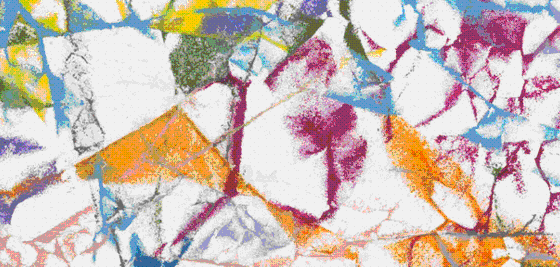
Inspiration often strikes from a blend of memories and dreams, particularly drawing from the vibrant contrast between tropical settings and the serene landscapes of my Nordic homeland. I start by immersing myself in colors and textures that evoke the 1970s aesthetic, experimenting with layered visuals that reflect both nostalgia and immediacy. The creative process often begins with a spontaneous sketch or color palette that captures an emotional tone I wish to explore.
What are the most important stages of your creative process?
The most critical stages of my creative process involve initial sketching, where I lay down the foundational composition, and the experimental phase, where I play with colors, graphics, and textures. Each layer I add—whether through paint or graphic elements—helps develop the narrative I aim to convey, blending tropical motifs with Nordic atmospheres.
How do you decide which idea becomes a final piece?
I choose ideas that evoke the strongest emotional response in me. If an idea resonates deeply and continuously sparks my curiosity throughout the developmental phase, it becomes a final piece. It’s a combination of intuition and the piece’s ability to communicate a cohesive visual dialogue.
How does experimentation influence the final result?
Experimentation is crucial, allowing organic evolution from initial concepts to final execution. Through mixing techniques—using both paint and graphic elements—I discover unexpected textures and forms. This fluid approach often leads to a more dynamic and engaging final piece, rich with layers and movement.

“Effective art is one that combines expressive spontaneity with technical precision.”
How do you handle revisions or modifications during the creation of a work?
Revisions are a natural part of my process. I view them as an opportunity to refine and enhance the narrative or aesthetic quality of the work. By revisiting and reworking a piece, I can infuse it with greater depth and clarity, balancing the initial instinct with intentionality.
How important are technical preparation and instinct in your process?
Both technical preparation and instinct are vital pillars of my process. Technical skills allow me to effectively manipulate media and explore complex compositions, while instinct guides my creative decisions, ensuring each piece remains authentic and emotionally resonant.
How much time do you dedicate to the conceptual phase versus the material realization?
I devote considerable time to the conceptual phase, as it lays the groundwork for the emotional essence and thematic direction of the piece. However, material realization often takes precedence once the idea is clear, as the physical act of creating brings concept to life and allows spontaneous adjustments.
How do you work on composition and visual structuring of your works?
Composition and visual structuring are fluid and dynamic. I rely on a mix of bold colors, layered textures, and graphic elements to guide the viewer’s eye and create rhythm. This approach reflects both structure and organic flow, mirroring the blend of natural and modern influences that inspire me.

How do you determine that a piece is truly complete and ready for exhibition or sale?
A piece feels complete when it communicates the intended emotion and visual story with clarity and resonance. It’s a balance between technical finish and emotional satisfaction—a point where the dialogue between the various elements feels resolved yet invitingly open to interpretation.
How does feedback from other artists or critics influence the final outcome?
Feedback is invaluable, offering fresh perspectives and insights that can refine and enhance my work. Engaging with other artists and critics allows me to view my pieces through different lenses, often inspiring additional refinement or bold new directions that enrich the final outcome.
Thank you Raakel. We truly appreciate your time and openness.
Curated by


