

Interview with Scott P. Hayes
In the vibrant heart of Brooklyn, we have the pleasure of speaking with Scott P. Hayes, a multifaceted painter and graphic designer whose unique artistic vision captivates audiences. Known for his intricate fusion of urban landscapes and classic tattoo art, Scott’s work is a reflection of his experiences and the dynamic environment that surrounds him. With a career rooted in creativity and a passion for storytelling through visuals, Scott is not only an artist but also a keen observer of society. In this interview, we delve into the influences that shape his art, the lessons learned throughout his journey, and the challenges he faces as a contemporary visual artist. Join us as we explore the mind and creative process of Scott P. Hayes.
Hi Scott, how do personal experiences influence your artwork?
Personal experiences profoundly shape my artistic vision. Growing up in a bustling urban environment, I often found inspiration in the juxtaposition of beauty and grit that characterizes city life. Each street corner, local café, and hidden alley has its own story, and I strive to capture these narratives in my art. My interactions with the diverse communities in Brooklyn also play a vital role, as they allow me to draw on a multitude of cultural influences. This blend of experiences not only informs my subject matter but also infuses my work with a sense of authenticity and emotional depth.
What’s the most important lesson you’ve learned as an artist?
Through my journey as an artist, I’ve learned that art is less about perfection and more about exploration and self-expression. Early on, I was overly critical of my work, fearing failure and seeking validation. However, gradually I discovered that embracing mistakes can lead to unexpected breakthroughs and growth. This flexibility allows me to experiment and explore various styles and techniques, ultimately leading to the development of my unique artistic voice. Additionally, I’ve learned to value the process itself—each brushstroke and layer brings me closer to understanding my creativity.
How do you decide when a piece is finished?
Determining when a piece is finished can be one of the most challenging aspects of creating art. For me, it often comes down to a combination of instinct and intention. I typically know a piece is complete when it resonates with the emotions I aimed to convey and visually aligns with my original concept. Sometimes, it’s a moment of clarity, where I realize that further alterations might dilute the essence of the work. I also tend to step away from my paintings for a day or two. Upon returning, I can see them with fresh eyes, which helps me make that final decision about their completion.
Which of your works are you most proud of, and why?
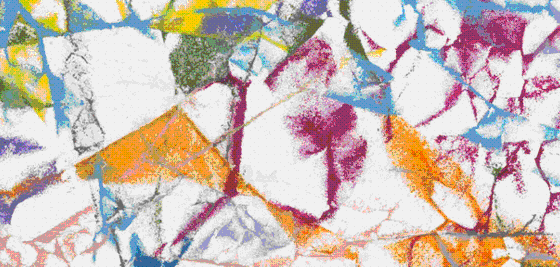
While each piece holds significance for me, my urban series stands out as a personal favorite. In these works, I merge elements of classic tattoo art with depictions of cityscapes, exploring themes of identity and resilience. These pieces not only showcases my technical skills but also serves as a tribute to the spirit of urban communities. The feedback and emotional connections it fosters in viewers reaffirm the impact of art, making it especially rewarding.

“These pieces capture the dynamism of city life.“
Do you incorporate social or political issues into your art?
Absolutely, I believe that art is a powerful platform for addressing social and political issues. Many of my works subtly or overtly engage with themes such as social justice, urban decay, and community identity. By reflecting on these topics through my art, I aim to provoke thought and conversation among viewers. For instance, in one of my recent pieces, I tackled the issue of gentrification, portraying contrasting elements of displacement and resilience within a neighborhood. By visualizing these struggles, I hope to inspire empathy and understanding, serving as a catalyst for change.
How do you handle the business side of being an artist, such as exhibitions, sales, or marketing?
The business side of being an artist can be daunting, but I approach it with a strategic mindset. I recognize that creating art is only part of the equation; effectively promoting and selling it is equally important. I dedicate time to research and network within the art community, seeking exhibitions and collaborations with galleries that align with my vision. Additionally, I utilize social media to share my work and connect with a broader audience, documenting my artistic journey and the stories behind my creations. Balancing these aspects requires discipline and organization, but I find it rewarding to build a sustainable career around my passion.
What’s your favorite environment or setting for creating art?
My favorite environment for creating art is a vibrant, dynamic space filled with inspiration. I thrive in urban settings where the energy of the city can be felt all around. While I enjoy working in my studio, which is adorned with eclectic artifacts and ample natural light, I also find great inspiration in the streets of Brooklyn. The sounds, colors, and stories that permeate these spaces fuel my creativity and inform my work.
How do you stay motivated and inspired during long projects?
Maintaining motivation during long projects can be challenging, but I find that establishing a structured routine helps significantly. I set specific milestones to break the project down into manageable parts, which allows me to celebrate small victories along the way. Additionally, I regularly revisit the initial spark of inspiration that led me to begin the project, whether it’s through sketches, research, or simply reflecting on my artistic goals. Taking breaks is equally important; stepping away gives me a fresh perspective and can lead to new ideas. Engaging with other artists through critique sessions or collaborative projects also keeps my passion alive, as the exchange of creativity often ignites new inspiration.

Have your cultural background or personal identity played a role in your artistic development?
Absolutely, my cultural background and personal identity are central to my artistic development. Growing up in a diverse environment has exposed me to various artistic traditions and perspectives. This cultural richness influences not only my subject matter but also my techniques and styles. I often draw from elements of my heritage, blending those with contemporary themes. This fusion allows me to create work that reflects my unique identity and experiences while resonating with broader audiences. My cultural heritage informs not only the visuals I create but also the stories and messages I wish to convey through my art.
What do you think is the biggest misconception about visual artists today?
One of the biggest misconceptions about visual artists today is that our work is purely driven by passion and inspiration, without considering the rigorous effort and discipline that goes into it. Many people assume that artists simply create when they feel inspired, but in reality, it often requires a structured practice, perseverance, and hard work. The art-making process can involve considerable preparation, research, and sometimes even mundane tasks such as administrative work or marketing. Additionally, there’s the misconception that artists are solely focused on aesthetics, while many of us are committed to conveying deeper social, emotional, or political messages that require thoughtful engagement.
What’s a recurring challenge you face as an artist, and how do you overcome it?
A recurring challenge I face is managing creative block and uncertainty about my direction. There are times when I question the relevance of my work or struggle to find motivation. To overcome this, I’ve learned to embrace these moments as part of the artistic journey. I often take the opportunity to step away from my current projects and explore other forms of creativity, whether it’s visiting galleries, reading literature, or experimenting with different mediums. Engaging with fellow artists and discussing our struggles often provides new perspectives and keeps the creative energy flowing. Additionally, I remind myself that these periods of doubt can lead to unexpected breakthroughs, ultimately enhancing my work.

Thank you for joining us as we explore the mind and creative process of Scott P. Hayes
Curated by


