
Oleksandr Shapovalov is a Ukrainian photographic artist, born in Mariupol, who has been living and working in Germany since 2022. For more than seventeen years, he has explored photography as a space of perception and artistic experience. Over time, he developed an authorial approach in which the image is formed entirely in-camera, without digital manipulation. For him, it is essential that structure, rhythm, and the plastic quality of the image emerge at the moment of exposure rather than being constructed in post-production.

His professional path began in reportage photography, where he learned to trust intuition and capture the decisive moment. Later work in motorsport photography deepened his understanding of speed, dynamics, and temporal tension. At the same time, his art education shaped the foundations of his sensitivity to color, space, and compositional structure.
A significant influence on his perception of color and light was Saul Leiter, for whom color functioned as an independent carrier of mood and whose images embodied quietness and suggestion. He also feels a strong affinity with the Impressionists, whose work emphasized atmosphere and fleeting impression over precise representation. These influences reinforced his understanding of photography not as mere depiction, but as a state of perception.

In his work, Oleksandr explores movement, time, and perception as living forces. For him, photography is not a tool for the precise reproduction of the visible world, but a way to make inner experience visible. He is drawn to that fragile moment when seeing becomes sensation — before perception turns into interpretation and the mind begins to organize what is seen.
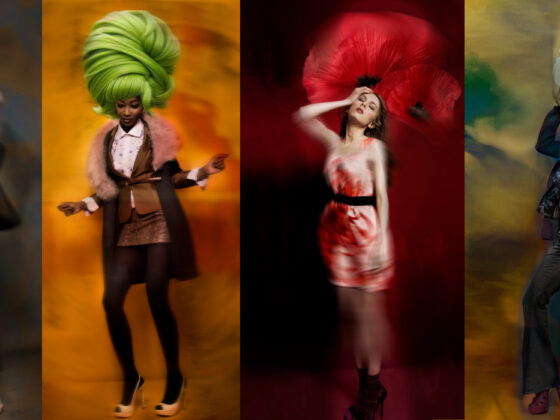
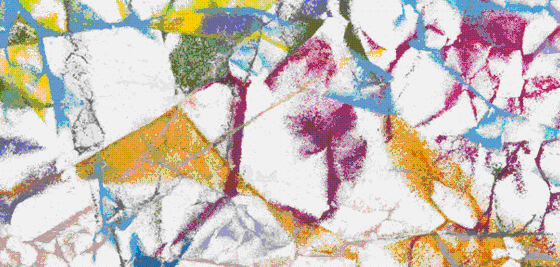
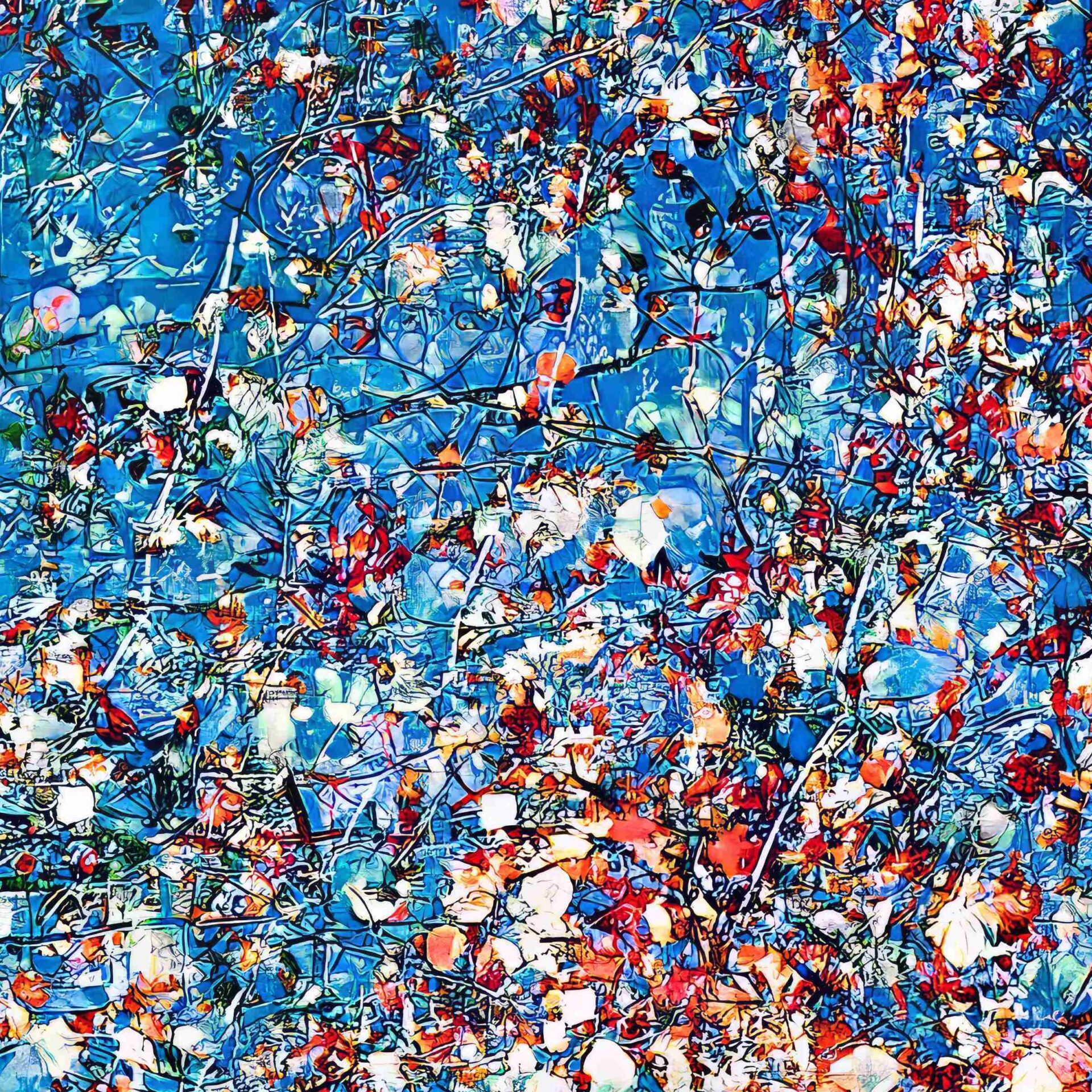
The foundation of his practice is a principled commitment to working in-camera. The image is formed entirely at the moment of exposure. Through intentional movement, multiple exposure, and the use of duration, he create composition, rhythm, and space in a single, concentrated act. He doesn’t construct images digitally and doesn’t interfere with their structure after the photograph is taken. Form, plasticity, and visual organization arise exclusively during the act of photographing.

In post-production, he adjusts only the color in order to faithfully convey the atmosphere and state experienced at the moment of capture. He doesn’t add or remove elements in order to not alter the content of the image. Everything present in the frame is the result of real physical interaction — between body, camera, and environment. This immediacy is essential to the artist, as it preserves authenticity and a sense of presence.

Today, nature occupies a central place in his practice, especially trees. He perceives them as living presences, carriers of memory, silence, and duration. In his work, Oleksandr explores the fragile relationship between human beings and nature — a connection rooted in primordial experience, yet gradually eroded by the speed and rationality of the modern world.
Over time, his focus shifted from recording external reality to conveying inner experience. Today, nature occupies a central place in his work, especially trees, which he perceives as living presences carrying memory and silence. Through his projects, he explores the fragile relationship between human beings and the natural world, seeking to return the viewer to a slower, more attentive, and intuitive way of seeing — a state in which the world is first felt, and only afterwards understood.

Oleksandr Shapovalov
Germany, 1977
Curated by